Slot developers rarely admit that most "new" releases are just recycled reel sets with a fresh coat of paint. Charge Buffalo breaks that pattern by building an entire mechanic - the charge meter - around a theme that usually relies on nothing more than symbol stacking and free spins. That single design choice changes how players approach every session, and it explains why so many are testing the free version before committing real money.
The charge buffalo demo gives newcomers a no-risk way to see whether the mechanic actually delivers on its promise. Unlike a standard trial spin, this demo mode lets you build the charge meter across dozens of rounds without financial pressure, so you can watch the pattern of triggers and payouts unfold naturally. For players comparing multiple providers before choosing where to deposit, that kind of unrestricted access matters more than a flashy trailer or a marketing blurb ever could. It's also worth noting that some platforms package the trial with bonus context - for instance, the charge buffalo demo hosted through certain promo pages includes side information about matching offers, which is useful if you plan to switch to real-money play afterward.
What follows is a practical breakdown of how the game works, why the charging system stands apart from typical bonus triggers, and what the Buffalo City backdrop contributes beyond decoration. Anyone deciding whether to spend real time - or eventually real money - on this title should have a clear picture of both the mechanics and the atmosphere before diving in.
What Is the Charge Buffalo Demo?
Origins and Purpose of the Demo Mode
The buffalo charge demo exists for one reason: to let players test volatility and mechanics without financial commitment. Free-play versions of slot titles have existed for years, but they've become more sophisticated as developers realize that transparency builds trust. A demo that hides key features or truncates the charge-building process would undercut its own purpose, so most reputable versions mirror the full game almost exactly, differing only in the absence of real currency.
How It Differs From the Real-Money Version
The core difference is stakes, not substance. Reel layouts, symbol values, and the charging mechanic behave identically whether you're playing with demo credits or actual funds. What changes is the psychological weight of each spin - and, in practical terms, the absence of withdrawal options. Players sometimes assume demo versions are rigged to appear more generous, but that contradicts how these systems are typically built: the return-to-player percentage and trigger frequency remain consistent across both modes to preserve accuracy for testing purposes.
Who Should Try the Demo First
Three groups benefit most from starting here:
- Players unfamiliar with charge-based mechanics who want to understand the buildup before risking money
- Bargain-conscious players comparing volatility across several buffalo-themed titles before choosing one
- Experienced slot players who want to confirm bonus frequency claims made in reviews or forums
Charge Buffalo Gameplay Explained
Reel Layout and Symbol Structure
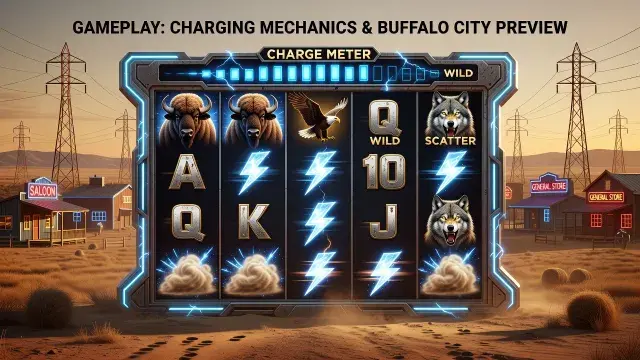
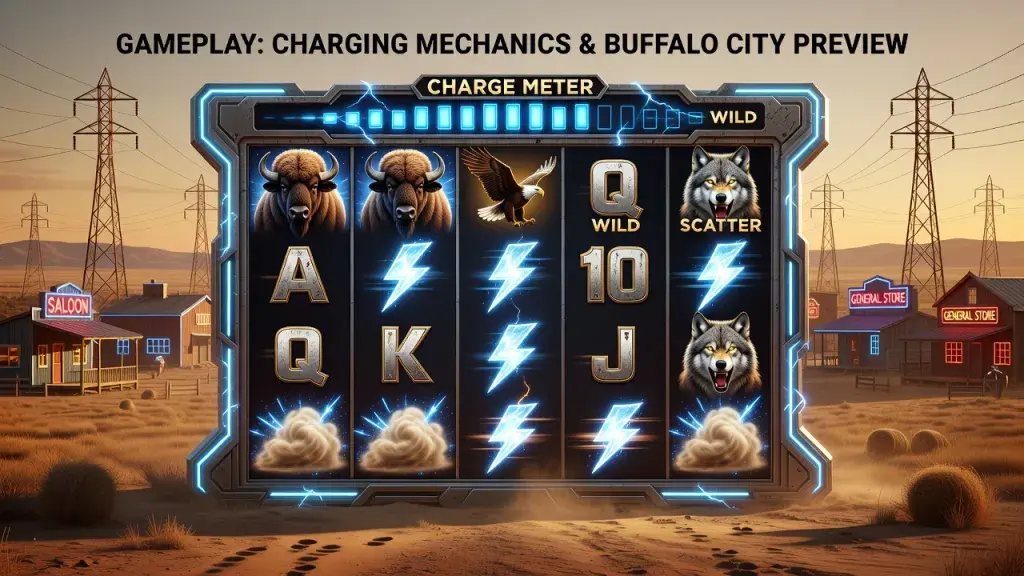
Charge buffalo gameplay follows a familiar grid format on the surface - multiple reels, multiple rows, a set number of paylines or a cluster-pay structure depending on the specific build. Symbols typically split into two tiers: standard card-based icons for smaller wins, and wildlife-themed symbols (buffalo, eagle, wolf) that carry higher payouts and interact directly with the charging system. This tiered structure rewards patience, since the highest-value symbols appear less frequently but contribute disproportionately to the charge meter when they do land.
Core Win Conditions and Payout Logic
Standard wins occur through matching symbol combinations across active lines, but the charge mechanic introduces a secondary win path. Certain symbol landings don't just pay out directly - they also feed energy into the charge meter, which eventually unlocks a distinct bonus state. This dual-purpose symbol behavior means every spin carries two layers of potential value: the immediate payout and the incremental progress toward a bigger event.
Special Symbols and Their Role
Wild symbols substitute for standard icons to complete winning combinations, while scatter symbols often govern access to free spins or bonus rounds independent of the charge system. In Charge Buffalo specifically, certain special symbols carry extra weight in the charging process, meaning their appearance matters twice over - once for the immediate combination, and once for accelerating the countdown to the charged event.
Understanding the Charging Mechanics
How the Charge Meter Fills
The buffalo charging demo makes the meter-filling process visible and easy to track, which is precisely why testing it before real-money play has value. Each qualifying symbol landing adds a set increment to the meter, displayed prominently on screen. Unlike random-trigger bonus systems, this visible progress bar gives players a concrete sense of how close they are to the payoff event, reducing the guesswork that frustrates newcomers to volatile slot titles.
What Happens When the Meter Is Full
Once fully charged, the meter typically unlocks an enhanced round - extra wilds, multiplier boosts, or a dedicated free-spin sequence with amplified symbol behavior. The exact nature of the payoff varies by build, but the underlying principle stays consistent: sustained play gets rewarded with a concentrated burst of higher-value outcomes rather than scattered, unpredictable bonuses.
Strategic Implications for Players
Because the charge meter persists across spins (within a session), players who understand the mechanic can make more informed decisions about bankroll pacing. Cashing out too early might mean walking away just before a charged round triggers. Conversely, chasing a nearly full meter with escalating bets carries its own risk. The smart approach is to treat the meter as a long-term indicator, not a countdown clock demanding immediate escalation.
Exploring Buffalo City: Setting and Theme
Visual Design and Atmosphere
Charge buffalo city serves as the game's backdrop, blending a stylized American plains aesthetic with subtle urban framing - hence "city" rather than pure wilderness. The art direction leans into warm, dusty tones punctuated by electric blue accents tied to the charging theme, creating visual cohesion between the setting and the mechanic itself. This isn't incidental: the charge system's lightning-and-energy motif is echoed in the background architecture, reinforcing the sense that the entire city runs on the same power players are building meter by meter.
Thematic Connection to the Charging Mechanic
Buffalo City isn't just scenery. The energy-charging visual language - glowing symbols, electrical surges animating the meter - ties directly into the city's design, which features power-line silhouettes and neon-lit structures reminiscent of an industrial frontier town. This thematic integration gives the game a stronger identity than titles that bolt a bonus feature onto an unrelated theme.
Soundtrack and Ambient Design
Audio design in Buffalo City complements the visual charge buildup with rising percussive layers that intensify as the meter fills. Rather than looping a static background track, the sound design responds dynamically to player progress, giving auditory feedback that reinforces the visual meter - a small but effective touch that keeps sessions engaging over longer stretches of play.
Tips for Getting the Most Out of the Demo
Setting Realistic Session Goals
Treat the demo as a research tool, not idle entertainment. Set a specific number of spins - fifty or a hundred - and track how often the charge meter fills within that window. This gives you a rough sense of frequency before switching to real-money play, where that same data becomes financially meaningful.
Tracking Charge Frequency and Patterns
Keep informal notes on which symbols contributed most to charge progress and how many spins typically separate one charged event from the next. Patterns won't be perfectly consistent - that's the nature of randomized systems - but a rough average helps calibrate expectations and prevents both premature disappointment and unrealistic optimism.
Transitioning From Demo to Real-Money Play
Once you're comfortable with the timing and payout structure, moving to real stakes should feel like a natural continuation rather than a leap into the unknown. Start with smaller bet sizes than you might otherwise consider, since real-money variance feels sharper than demo variance even when the underlying math is identical.
Frequently Asked Questions
Is the charge buffalo demo identical to the real-money version in terms of odds?
Yes, reputable demo versions use the same return-to-player percentage and trigger logic as the paid version. The only meaningful difference is that demo credits carry no cash value and cannot be withdrawn.
How long does it typically take to fill the charge meter?
This varies based on symbol landing frequency and the specific build's configuration, but most players report needing several dozen spins on average. Higher-value symbols contribute more per landing, so streaks of strong symbol appearances can accelerate the process noticeably.
Can I lose progress on the charge meter if I stop playing?
In most implementations, the charge meter resets once you close the session or switch games, since it's tied to active session data rather than a persistent account-level feature. Always check the specific game's rules panel to confirm this before assuming progress carries over.
Does Buffalo City affect gameplay mechanics, or is it purely cosmetic?
The setting itself doesn't alter mathematical outcomes, but its visual and audio cues are directly synchronized with the charging system, giving players real-time feedback on their progress. In that sense, the theme enhances usability even though it doesn't change probability.
What's the best way to decide if this game suits my playing style?
Spend enough time in the demo to experience at least two or three charged events, since a single session might not represent typical behavior. If the buildup period feels rewarding rather than tedious, and the payoff justifies the wait, the game likely suits players who prefer anticipation-driven mechanics over instant, frequent small wins.
Are there other buffalo-themed slots with similar charging systems?
Several developers have experimented with meter-based bonus systems, though few tie the mechanic as tightly to the buffalo theme as this title does. Comparing a handful of demos side by side is the most reliable way to judge which charging structure matches your preferred pacing.